ServicesBusiness Valuation
Business Valuation in Lockhart, TX
Our valuation estimates the price a qualified buyer would likely pay for your company, built from your tax returns, profit and loss statements and recent comparable sales. You receive a written report, the reasoning behind each figure and a frank list of what buyers will question. There is no charge, and it stays confidential.
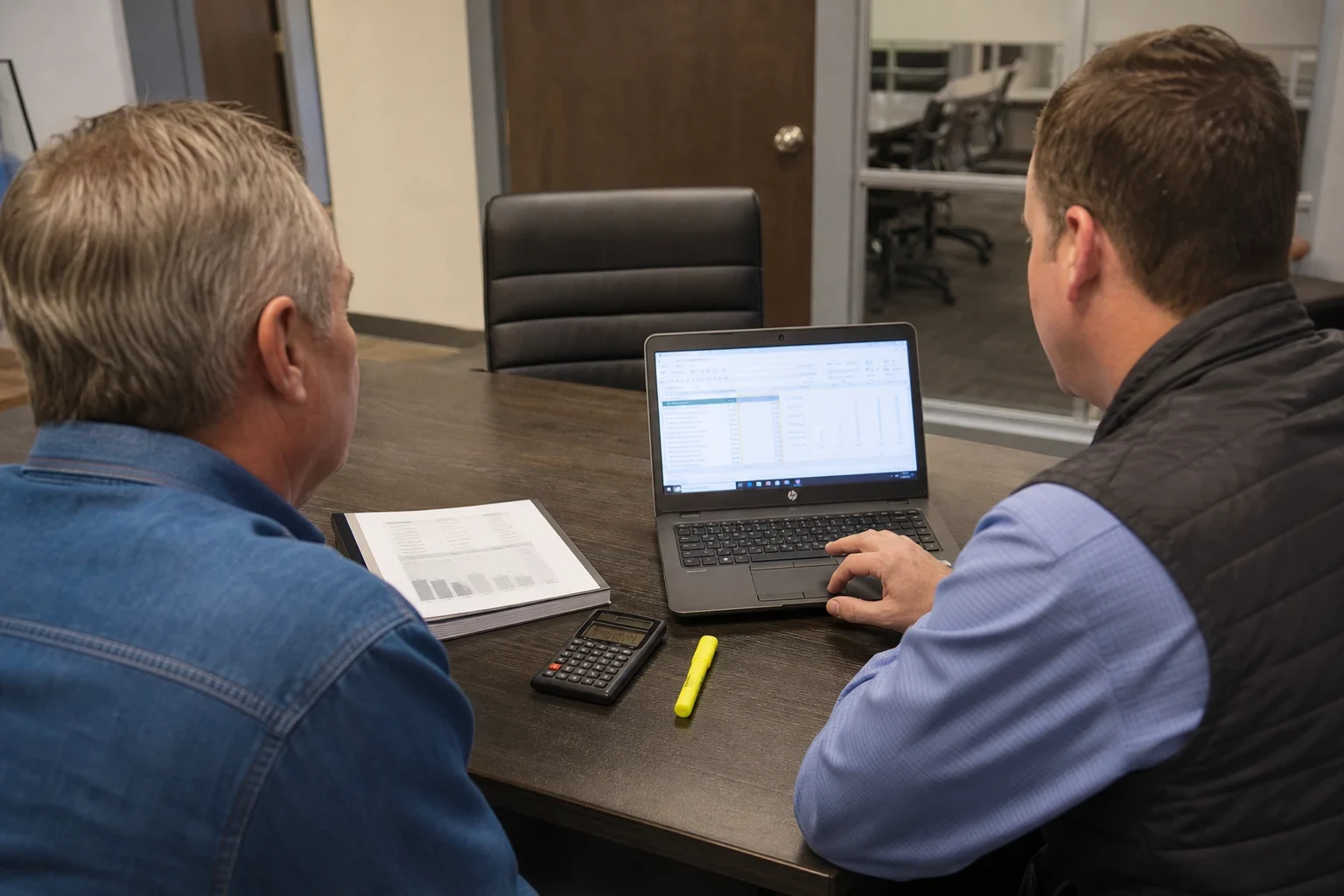
What a valuation tells you, and when you need one
A business valuation estimates what a qualified buyer would pay for your company today, on normal terms. For most owner-run businesses we start from seller's discretionary earnings, or SDE. That is net profit with your salary, personal expenses run through the company and one-time costs added back. Larger companies with a management layer are usually priced on EBITDA instead. The earnings figure is then multiplied by a range drawn from comparable sales in your industry.
Owners call us before listing through our Sell a Business service, before a partner buyout, when a buyer shows up unannounced, or a few years ahead of retirement as part of Exit Planning. The same person who first talks with you reviews the books and writes the report, so nothing gets lost in a handoff between a salesperson and an analyst.
Nothing is shared with employees, vendors or buyers unless you decide to go further.
What goes into your valuation
Recasting your financials
We take three years of tax returns and profit and loss statements and normalize them. Owner pay is adjusted to a market wage, and personal vehicle, insurance or family payroll costs are added back with a note on each. Every add-back should be one a buyer's lender can verify.
Earnings multiple from comparables
We match your company against completed sales of businesses with similar revenue, industry and margins. The multiple moves with risk, so we show where you fall in the range and what pushes you up or down.
Asset and inventory review
Furniture, fixtures and equipment, vehicles and inventory are listed separately. Inventory is usually counted at closing and paid for at cost on top of the price, which changes how a buyer reads your number.
Lease and real estate check
A buyer financing the deal usually needs a lease long enough to cover the loan, often ten years with options. We read your lease for term, assignment clauses and rent increases. If you own the building, our Business and Property Sales page explains how property is valued alongside the company.
Risk factors buyers price in
Customer concentration, heavy owner dependence, key employees with no agreements and a declining revenue trend all lower the multiple. We name each one plainly so you can fix it or price for it.
A line-by-line walkthrough
We go over the written valuation with you at our office or by video and explain what each figure means for a sale.

Signs it is time to get a valuation
- Someone has made you an offer
- An unsolicited offer is hard to judge without your own number. A valuation shows whether the price reflects your real earnings or just your revenue.
- You plan to retire in the next few years
- Most value improvements, like moving customer relationships off the owner or cleaning up the books, take two or three years to show in tax returns. Knowing the number early gives you time to change it.
- Partners disagree on what the company is worth
- A partner exit goes more smoothly with a figure both sides can examine. Our Partner Buyouts and Succession work usually starts with this step.
- Your books mix personal and business costs
- That is common in owner-run companies and not a problem by itself. It does mean your reported profit understates what a buyer would earn, and the gap needs documenting before any listing goes out.
How the valuation works
- 1
A confidential first call
We talk through what the company does, how long you have owned it and why you want a number. Then we tell you which documents to gather.
- 2
Document review
You provide three years of tax returns, a year-to-date profit and loss statement, the balance sheet, your lease and an equipment list. We read them and come back with questions about add-backs and any unusual years.
- 3
Recast and test against financing
We build the adjusted earnings figure and compare it to recent sales. A price only works if the company's cash flow can cover a buyer's loan payments with room left over, so we check that too.
- 4
Report and walkthrough
You get a written valuation with a value range, the reasoning behind it and a list of the factors holding the number back. The person who took your first call walks you through it.
What it costs and what shapes the work
The valuation is free and confidential, with no retainers and no hidden fees. If you later list with us, you pay nothing up front, and we only get paid when the seller does. What varies is how much work the valuation takes and how long it runs.
- Quality of your records
- Accountant-prepared statements that match the tax returns move quickly. Cash-basis books, missing months or a long list of add-backs take longer to verify.
- Locations and entities
- Two storefronts, or an operating company paired with a separate equipment company, have to be combined and untangled before earnings can be measured.
- Property sold with the company
- If you own the building and want it included, the real estate is priced on its own terms, apart from the business earnings. That separate review adds time to the work.
- Depth of comparable sales
- Restaurants, retail and service companies have plenty of sales data. Niche manufacturers and specialty firms take more digging to find fair comparisons.
Business valuation questions
- How does your valuation compare with a certified appraisal?
- Our report is a broker's opinion of market value, meant for pricing a sale or planning an exit. Courts, estate tax filings and some lenders require a formal appraisal from a credentialed appraiser instead. If your situation calls for one, we say so at the start and explain what each document covers.
- Why is my business worth less than my revenue suggests?
- Buyers pay for earnings they can keep, not for sales. A company with high revenue and thin margins, or one that depends on you personally, sells at a lower multiple. We show exactly which factors are pulling the number down.
- Will my employees or customers find out?
- No. We work from the documents you provide and meet by phone, video or at our office, so no one needs to visit your location. Nothing leaves our hands without your approval.
- Do I have to list with you afterward?
- No. The valuation is yours to keep. Some owners use it to plan improvements and come back later, and some decide not to sell at all.
- How often should a valuation be updated?
- Once a year if you are planning an exit, or after a big change such as losing a major customer, adding a location or signing a new lease. Value follows your trailing twelve months of earnings, so an old number drifts.
- Do you value businesses outside Lockhart?
- Yes. We work with owners in Luling, San Marcos, Kyle, Buda and the surrounding area, mostly by phone and video.

Put a real number on your company
A single phone conversation gets your free, confidential valuation underway, handled by the same person from first questions to final report. If you are looking to buy instead, we can register you for current listings during that call.